0
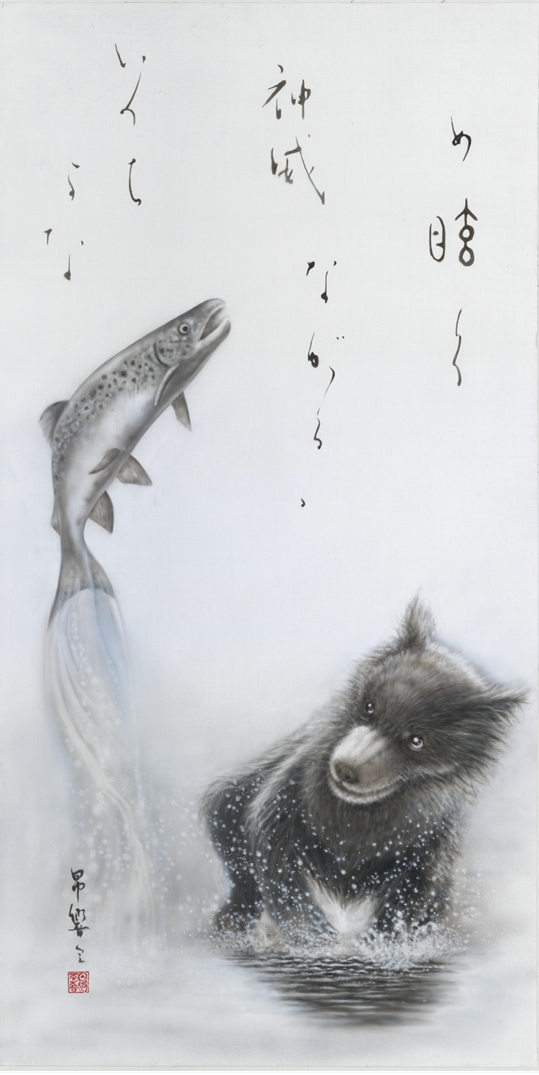
“Bear Frolicking with Upstream‑Running Salmon” 2026
— An Ezo Brown Bear Playing with Upstream‑Swimming Atlantic Salmon —
Acrylic, Canvas, Tatami-omote 45 × 90 cm
“Dazzling, ever‑turning, divine currents of life.”
In each fleeting moment, time shines with overwhelming brilliance, and every being in this world carries a divine presence that circulates life itself. This work depicts an imagined scene in which a young Icelandic Atlantic salmon and a young Japanese Ezo brown bear play together in the same river.
In 2025, at the Melsá River in Reykjavík, the removal of the Ytri‑Hraundalur hydroelectric dam allowed Atlantic salmon—once gone from the river—to return again to spawn. Because Atlantic salmon instinctively return to the river of their birth, their future prosperity is now expected to grow. Iceland is known for its long-standing environmental efforts, preserving ecosystems that remain exceptionally healthy for fish and wildlife.
Meanwhile in Japan, particularly in Hokkaido—whose natural environment most closely resembles Iceland—river temperatures have risen, and autumn runs of chum salmon have begun to fail. Since most salmon in the world return only once in their lifetime to their natal river to spawn before dying, the impact of this decline is deeply concerning.
Japan also shares the belief that divine spirits dwell within all things. Among them, the brown bear has long been revered as one of the highest deities in the culture of the Ainu, the Indigenous people of Hokkaido. For such a sacred animal, the decrease in salmon before winter hibernation poses a serious threat.
In the same year, 2025, Japan saw a sharp rise in incidents of starving bears attacking people due to various environmental changes. In Shiretoko Peninsula—the only region in Japan where untouched nature still remains—an estimated 400–500 Ezo brown bears lived seven years ago. Yet more than 300 bears have been culled in the past three years after entering towns. Whether a warning from nature or not, bears have become an unprecedented threat to people this year.
Nature’s brilliance is dazzling. A world where the cycles of life flow in harmony is a world of beauty. As a fantasy of such harmony, this piece portrays Iceland’s vibrant, upstream‑running Atlantic salmon and a young, innocent Ezo brown bear—still nourished by its mother’s milk and not yet hunting—expressed through the aesthetic sensibility of traditional Japanese ink painting.
The materials combine Japanese and Western elements: acrylic paint instead of ink, applied with a Western airbrush on oil‑painting canvas, and mounted on tatami‑omote, the humble woven surface traditionally used in Japanese living spaces.
「熊戯鮭遡上図」 2026
―蝦夷羆、遡上する西洋鮭と戯れる図―
Scene of an Ezo Brown Bear Frolicking as Atlantic Salmon Swim Upstream
アクリル、キャンバス、畳表 45×90㎝
「目眩(めくるめ)く、神居ながるる いのちかな」
一瞬一瞬、眩いばかりに美しく光輝く時の流れの中で、この世の全てに神がやどり、その命を巡らせている。
アイスランドの若々しいセイヨウサケと日本の若いエゾヒグマが、同じ川で戯れるという架空的場面を描いています。
2025年、レイキャビクMelsá(メルサ川)ではYtri‑Hraundalur(イートリ・フラウンダル)水力発電ダムが撤去されたことで、一度はいなくなってしまったセイヨウサケが再び産卵に戻ってきたと聞きました。セイヨウサケは産卵のため毎年生まれた川に帰ってくるため今後ますますの繁栄が期待されることでしょう。アイスランドでは長年の人々の取組みによって環境が守られ、魚や動物にとって非常に良い生態系が保たれていると聞きます。
一方、日本ではアイスランドに最も近い環境である北海道で、川の水温が上昇し、秋にシロサケが戻ってこないという状況が始まっています。世界のほとんどのサケは一生に一度だけ故郷の川に戻って産卵し命を終えてしまうため、その影響が心配されています。
万物の全てに神が宿るという考え方が日本にもありますが、中でもヒグマは北海道の先住民、アイヌの文化において最高の神の一つと考えられてきました。そんなヒグマにとって、冬眠前のサケの減少は非常に深刻な問題です。
同じ2025年、日本の全国各地で飢えたクマが人を襲うという事件が急増しました。日本で唯一自然がそのまま残されている知床半島では7年前400~500頭のエゾヒグマがいたと推計されていますが、町に出たがために駆除されたものがこの3年間で300頭以上にものぼったそうです。神の警告か、今年クマはかつてないほど人々の脅威となっています。
眩いばかりに美しい自然。全ての生命にとって循環が整った世界。そんなファンタジーとして、遡上するアイスランドの生き生きとしたセイヨウサケと、それに戯れる母乳によりまだ狩りをしない幼く無邪気な日本のエゾヒグマの姿を、日本伝統の水墨画的イメージで現しました。
素材は和紙ではなく油彩画用キャンバスに、アイテムは西洋発祥のエアブラシを使って墨ではなくアクリルカラーで描き、台紙には日本の生活の座に敷く素朴な畳表を用いました。
コメント
ログインするとコメントできるようになります